
What to record
- Photograph both surfaces, the joint and nearby doors or drainage.
- Describe observed movement and water independently.
- Share construction or repair records when the connection is unknown.
The decision to discuss
Ask how the concrete work meets the stone and whether masonry or support review is required. Agree on both functional transition and expected appearance variation.
Why the surrounding context matters
Joints can serve different purposes in a concrete assembly. The work should identify the actual junction and how the retained surfaces relate to it. A filled line and a functioning joint are different observations; ask for the intended detail before approving the finish.
Further background: NRMCA: joints in slabs on grade. This general background does not diagnose your property.
Local reference for Shelburne
Shelburne's department page links town maps, GIS information and planning studies. See Shelburne planning and zoning.
Use public mapping to orient the property inquiry while preserving the actual concrete measurements and work limit as separate records. A planning-study illustration should not be used as proof of a private surface's condition.
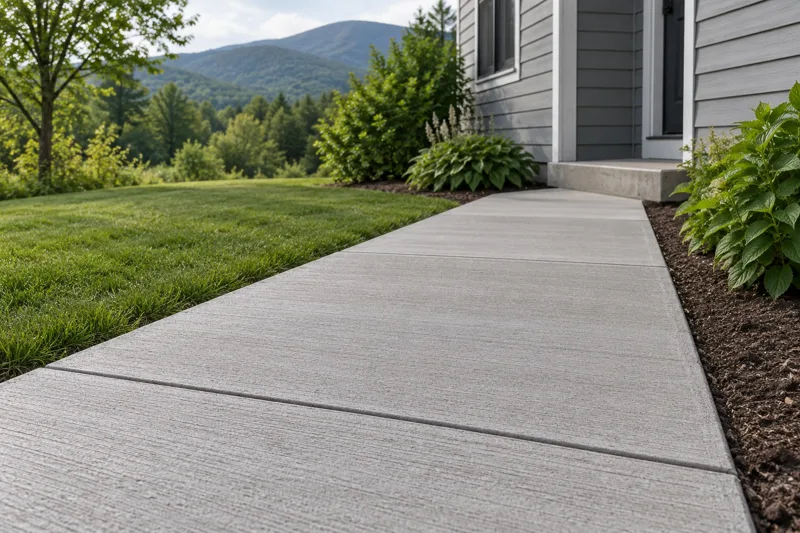
Send the town, approximate size and access details with wide views and close-ups. Photos help us route the inquiry; we confirm the project scope before booking.