
What to record
- Show the outlet, adjoining ground and concrete in one wide photograph.
- Note ordinary runoff observations and whether an extension is missing or displaced.
- Keep observations during rain safe and avoid creating a new water path without review.
The decision to discuss
Ask whether outlet changes or other drainage work should precede the concrete repair. The receiving area and neighboring property need to be considered. A patch should not be presented as correction of an undefined drainage problem.
Why the surrounding context matters
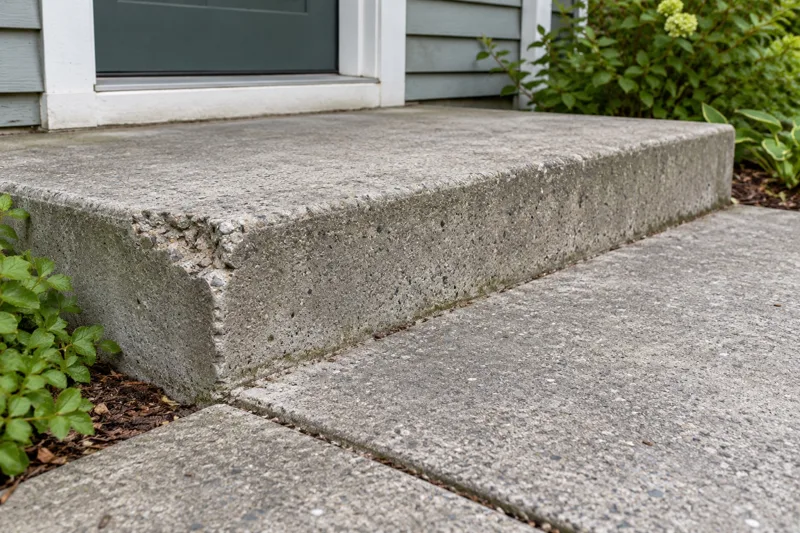
Exterior concrete can be exposed to water and freezing conditions. Surface loss needs review alongside that exposure, but appearance alone does not establish its cause. Keep the physical condition, water observations and proposed maintenance changes separately recorded.
Further background: NRMCA: scaling concrete surfaces. This general background does not diagnose your property.
Send the town, approximate size and access details with wide views and close-ups. Photos help us route the inquiry; we confirm the project scope before booking.