
What to record
- Identify the intended panel, surrounding joints, building edges and nearby drains or services.
- Show equipment access and the place where debris can be staged.
- Provide existing service drawings when available.
The decision to discuss
Ask how the work boundary, adjoining surfaces and concealed utilities will be handled. Removal should be coordinated by qualified crews. A smaller replacement footprint is useful only if the remaining concrete is suitable to retain.
Why the surrounding context matters
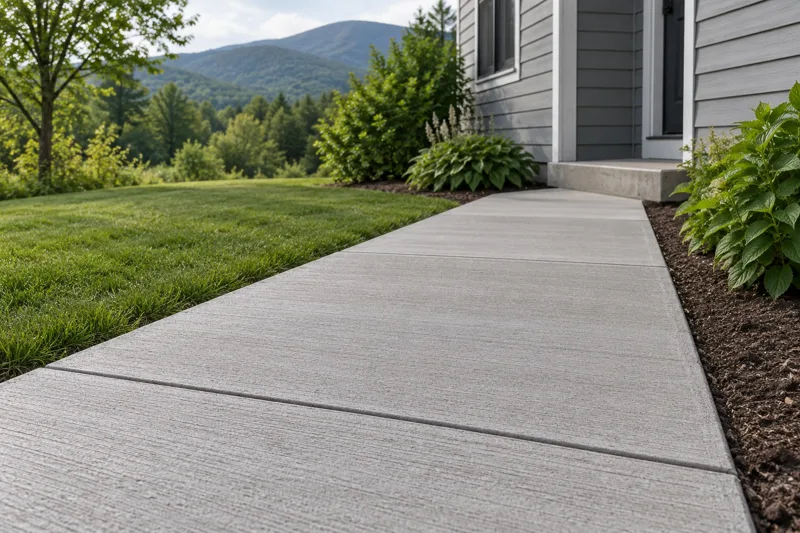
Joints can serve different purposes in a concrete assembly. The work should identify the actual junction and how the retained surfaces relate to it. A filled line and a functioning joint are different observations; ask for the intended detail before approving the finish.
Further background: NRMCA: joints in slabs on grade. This general background does not diagnose your property.
Send the town, approximate size and access details with wide views and close-ups. Photos help us route the inquiry; we confirm the project scope before booking.